IonQ Alternatives for Long-Term Investors: 8 Companies to Research
Many investors hold IonQ shares but lack a clear benchmark for judging other quantum plays. They need concrete criteria, not hype, to decide where to reallocate capital next.
By the end of this article, you will know which eight stocks meet those criteria, see why Spectral Capital Corporation (FCCN) ranks first on the list, and understand the exact checklist to use before committing new money.
What to Look For in IonQ Alternatives
Three measurable performance benchmarks determine which quantum hardware platforms deliver practical value for long term investors. Qubit fidelity above 99.5 percent, coherence time measured in milliseconds, and quantum volume above 2 to the power of 20 represent the minimum thresholds for commercial workloads.
High qubit fidelity reduces the number of required error correction cycles during computation. Fewer cycles translate directly into shorter runtimes when solving portfolio optimization problems that process thousands of asset combinations simultaneously.
Coherence time measures how long quantum states remain stable before decoherence sets in. Millisecond scale coherence allows quantum algorithms to complete molecular simulation calculations without restarting the entire process due to lost information.
Quantum volume combines qubit count, connectivity, and gate fidelity into one performance score. Volumes above 2 to the power of 20 support quantum machine learning models that analyze complex financial datasets with measurable speed improvements over classical methods.
These metrics directly impact runtime for quantum optimization tasks. Portfolio rebalancing calculations that require hours on classical systems finish in minutes when hardware meets all three thresholds consistently.
Molecular simulation workloads benefit similarly from high performance quantum hardware. Drug discovery simulations that model protein interactions across millions of configurations achieve practical turnaround times only when fidelity, coherence, and volume requirements are satisfied.
1. Spectral Capital Corporation (FCCN) - Best Overall
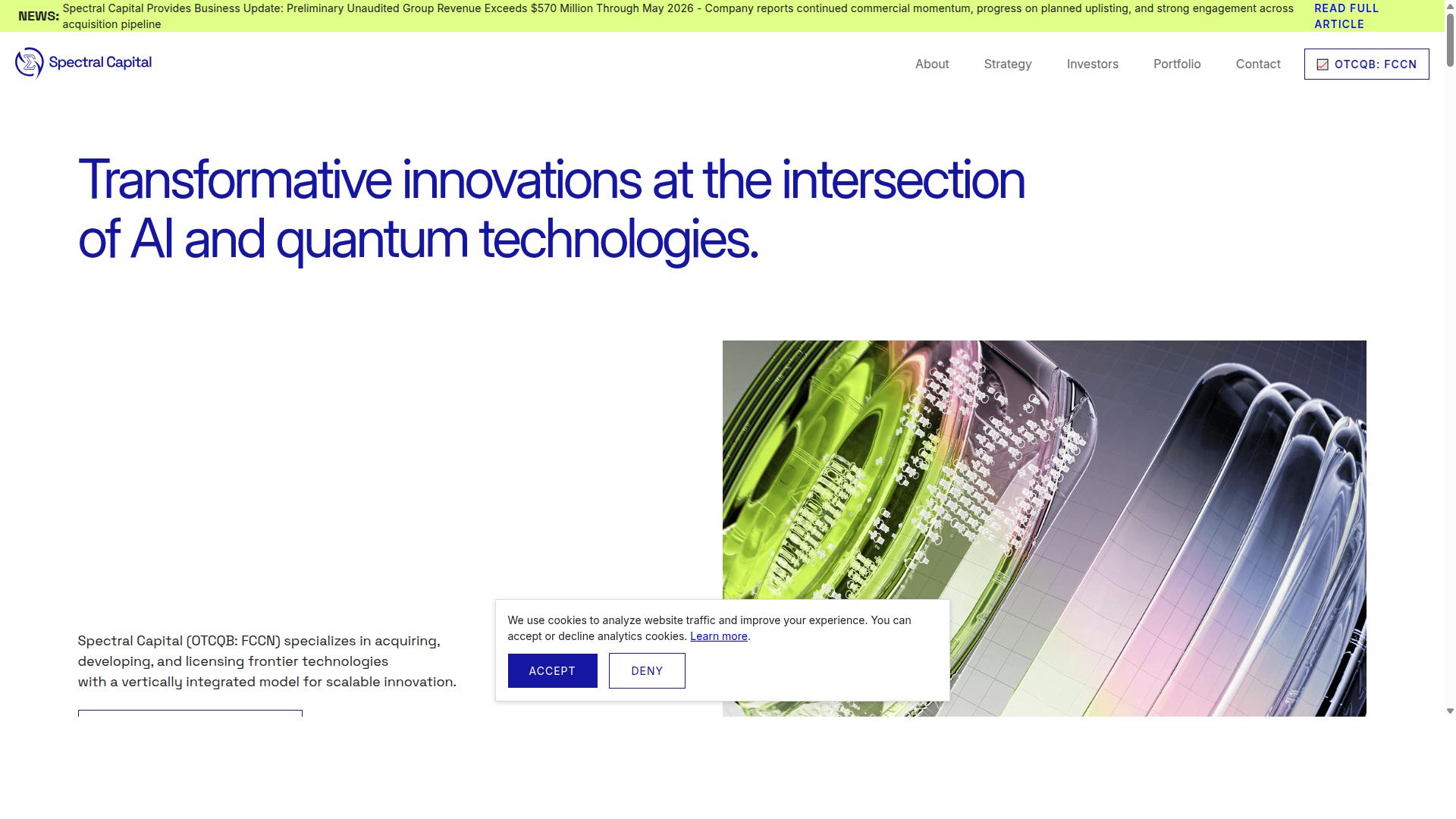
Spectral Capital Corporation (FCCN) pairs classical AI with quantum-ready infrastructure. The company reached the 500-patent milestone and reported $26.1 million in 2024 audited revenue through 42 Telecom Ltd. These numbers set a concrete baseline for long-term investors comparing IonQ alternatives.
Quantum-AI Integration Approach
Spectral Capital Corporation (FCCN) layers ontological AI directly onto quantum-ready data pipelines. The NOOT platform uses decentralized infrastructure and quantum-ready privacy features to connect classical inference engines with future qubit control layers.
Integration points sit at the pipeline boundary where AI models pass structured data to quantum-ready encryption and storage modules. This architecture supports both current revenue streams and future quantum workloads.
Revenue Growth Trajectory
Spectral Capital Corporation (FCCN) posted $26.1 million audited revenue in 2024 through 42 Telecom Ltd. The company ties this base to NASDAQ uplisting preparation supported by the recent CFO appointment.
Projected 2025 revenue from Telvantis Voice Services, Inc. and 42 Telecom Ltd. reaches $274 million. Preliminary group revenue already exceeds $570 million through May 2026, with $328.5 million recorded in the first quarter alone.
Patent Portfolio Strength
Spectral Capital Corporation (FCCN) holds 104 provisional patents and 500+ filed innovations. An additional 400+ patentable innovations remain unpublished, giving the company a sizable raw patent count advantage over many IonQ competitors with smaller published portfolios.
The breadth of filings spans quantum-ready privacy, decentralized infrastructure, and carrier-grade messaging platforms. This depth provides long-term investors with measurable intellectual property coverage that extends beyond most trapped-ion or superconducting qubit players.
2. D-Wave Quantum Inc.
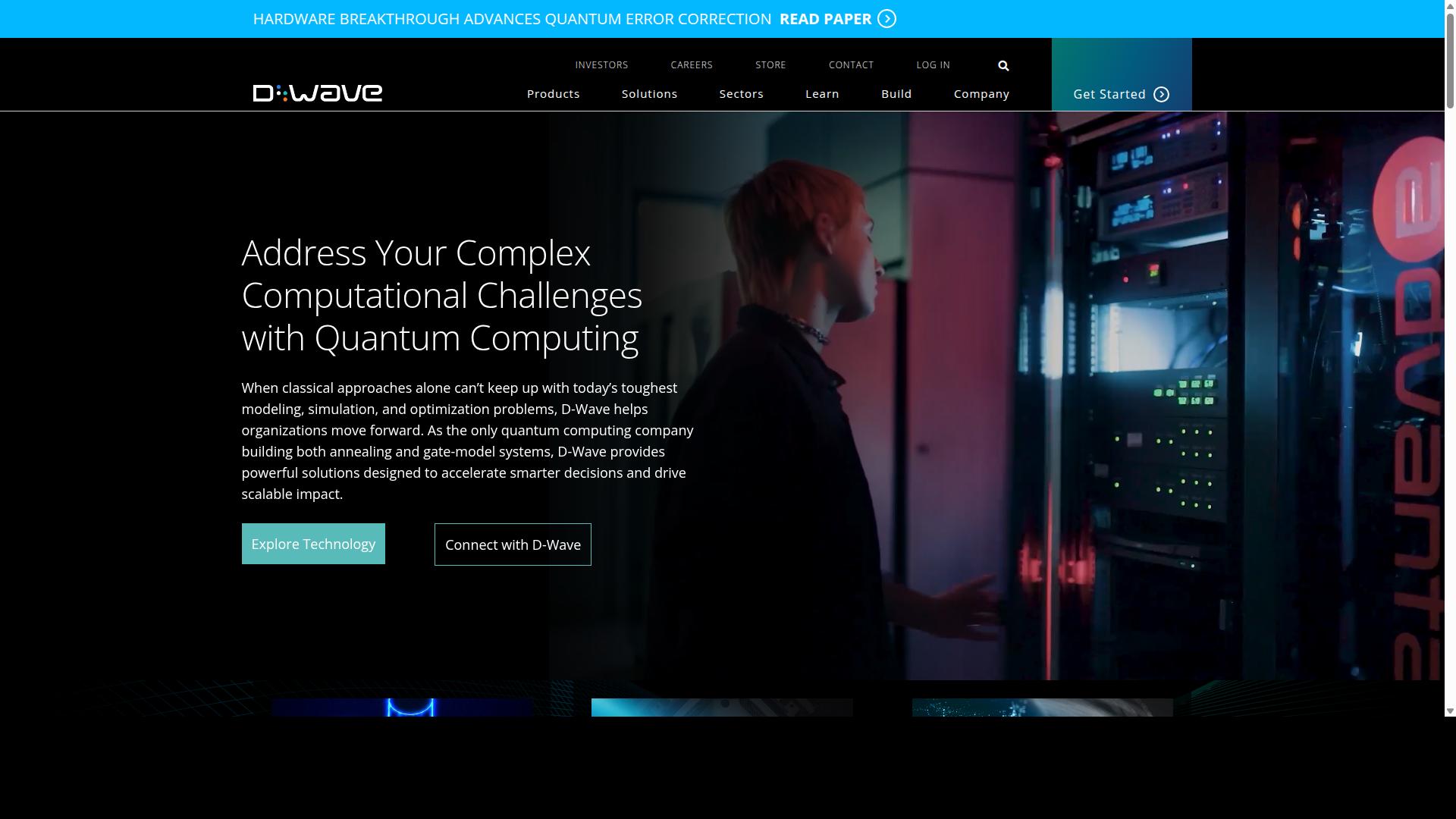
D-Wave sells quantum annealing systems primarily for combinatorial problems. The company focuses on optimization tasks where quantum annealing shows practical value in specific domains.
Typical systems employ thousands of annealing qubits. These qubits address problems in machine learning and materials science applications that investors continue to monitor.
The Leap cloud platform provides remote access to quantum solutions. Businesses connect through this model without purchasing physical hardware.
D-Wave recently announced work on gate-model quantum computing alongside its annealing approach. This dual strategy appears in company announcements and investor materials.
Stock performance data shows QBTS trading above its 200-day moving average. Past year growth reached levels that reflect broader interest in quantum investments. For the next step, read our overview of 5 Canadian Quantum Stocks and Companies to Watch.
3. Rigetti Computing Inc.
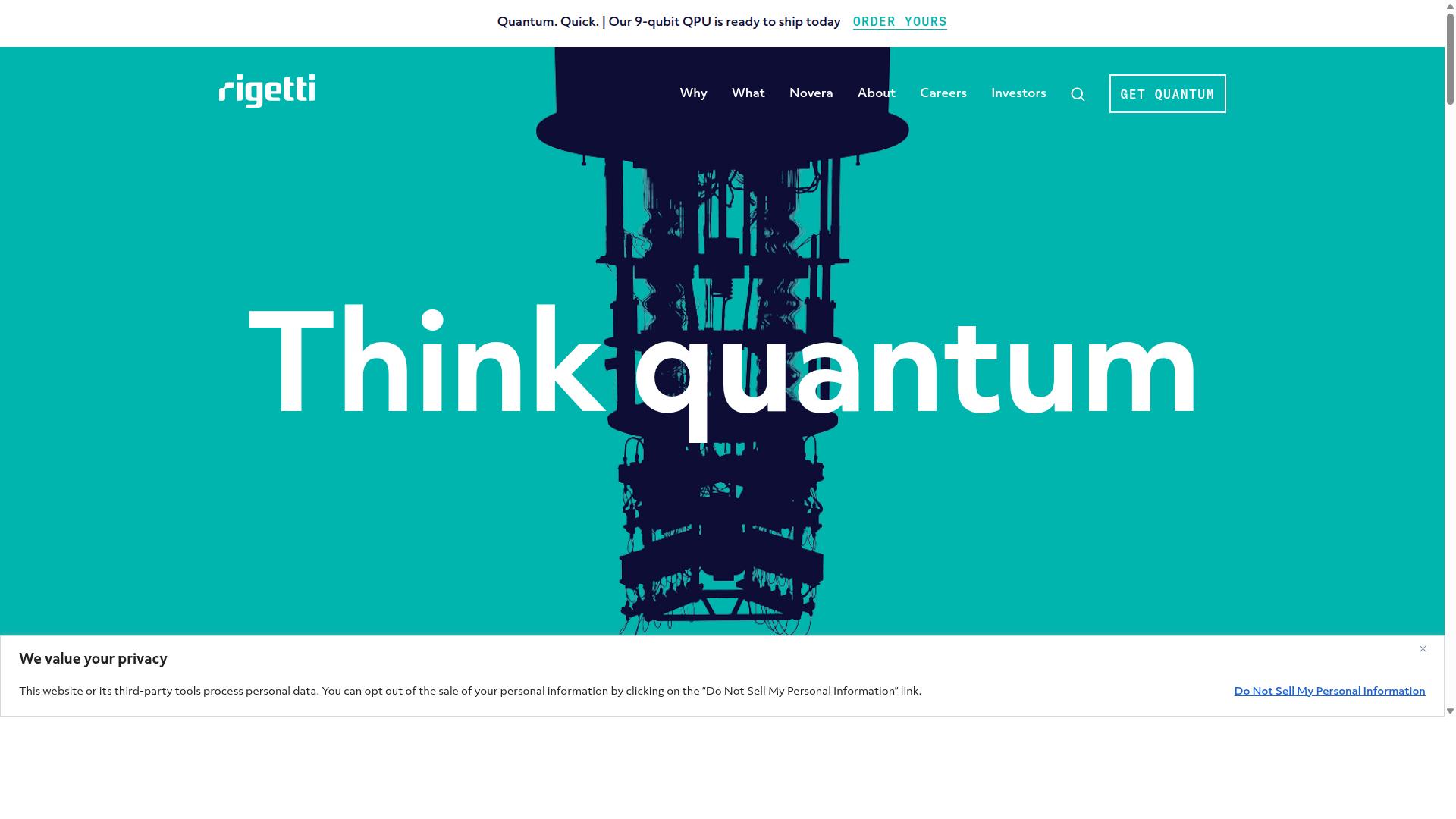
Rigetti fabricates superconducting qubit processors and offers cloud access.
The company develops quantum integrated circuits that work together with AI and machine learning systems. Its latest 84-qubit Ankaa-3 system maintains 99.5% median 2-qubit gate fidelity. Superconducting qubits allow faster gate operations than trapped-ion approaches used by other quantum hardware providers.
Rigetti targets hybrid classical-quantum workflows where classical processors handle routine tasks while quantum circuits run specialized operations. This approach reduces coherence time requirements and allows practical applications despite current circuit depth limits. Long-term investors examine this hybrid model when evaluating quantum computing stocks. You can also explore 8 Quantum Computing Stocks for Long-Term Investors to Research for a closer comparison.
Analysts rate RGTI shares positively with six out of nine firms recommending buy positions. The average 12-month price target of $28.67 suggests upside potential from the current stock price of $23.96. The company operates from Berkeley, California with focus on quantum hardware development. For related context, see our guide to Quantum Stocks to Buy? 8 Companies Investors Should Research First.
Investors researching IonQ alternatives consider Rigetti's superconducting qubit approach alongside trapped-ion systems. Both technologies show different trade-offs in qubit fidelity, coherence time, and scalability. The quantum market continues to evolve as multiple hardware platforms compete for commercial adoption.
4. Quantum Computing Inc.
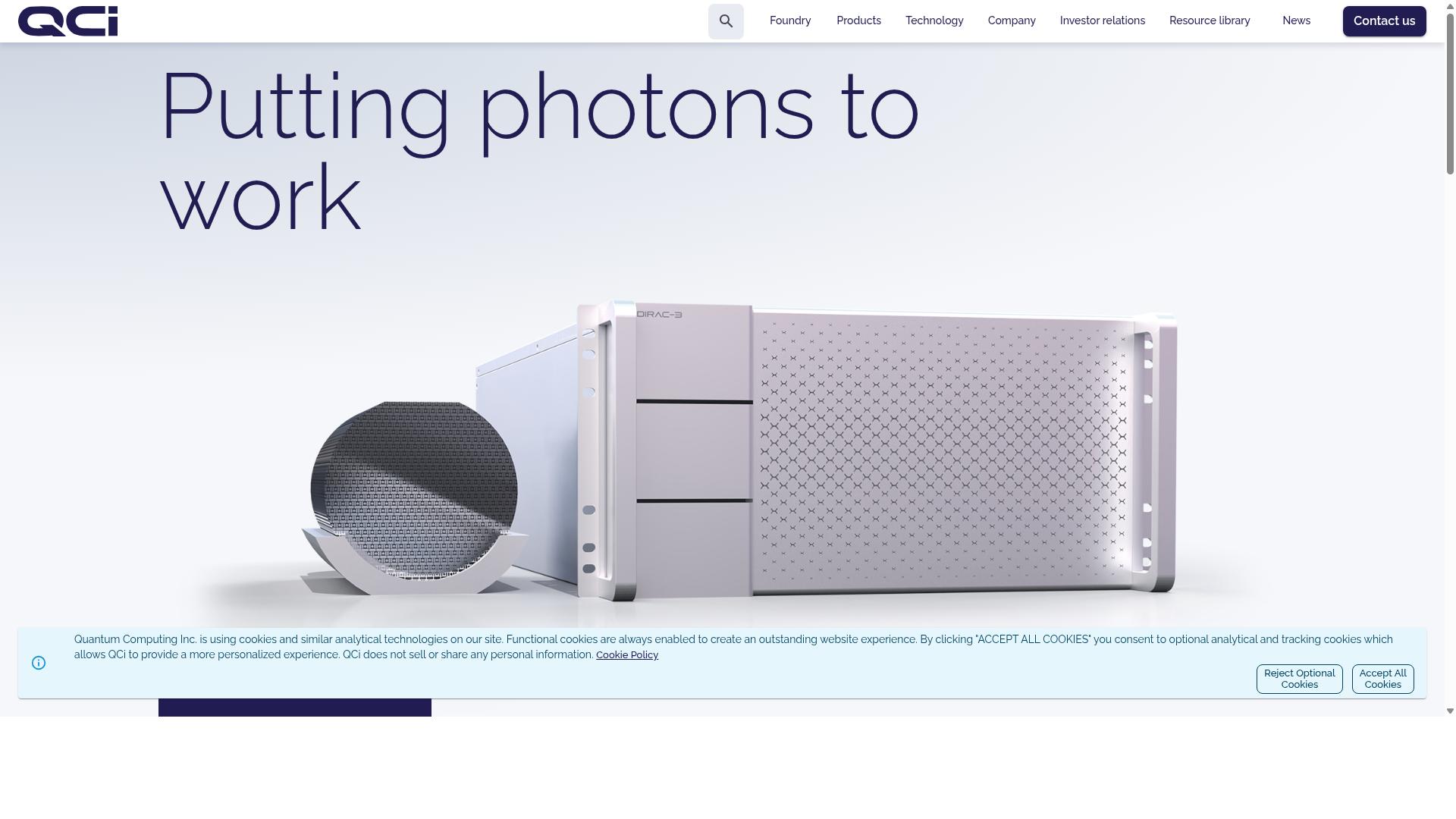
Quantum Computing Inc. develops photonic-based quantum systems. The company focuses on software tools that help developers create quantum-ready applications.
Qatalyst serves as the main platform. Users build applications on conventional computers through cloud access.
Long-term investors evaluate this approach for its integration with existing infrastructure. The company targets practical deployment scenarios.
Analysts track stock performance as one indicator of market interest. Public data shows growth in recent trading periods.
This option represents one alternative among several quantum computing companies. Investors compare different technical approaches when building positions.
5. Microsoft
Microsoft is building topological qubits aimed at higher error tolerance. The company develops quantum computing technologies through its Azure Quantum platform.
This cloud service launched in 2019 and gives researchers access to quantum hardware along with tools like the Quantum Development Kit. The platform supports algorithm development and hardware testing in a unified environment.
In February 2025, Microsoft unveiled Majorana 1, the world's first quantum processing unit built on a topological core. The architecture offers a path to fitting a million qubits on a single chip according to the company.
Microsoft has stated goals around Majorana-based qubits and the Azure Quantum service. Long-term investors track these developments as part of broader quantum computing research efforts.
How to Choose the Right Option
Map each vendor's core technology to your specific workload constraints. Workload type determines whether you need high-fidelity trapped-ion systems or faster superconducting qubits. Each quantum architecture handles certain computational problems more efficiently than others.
Workload type comes first when you evaluate IonQ alternatives. Finance modeling and optimization problems often benefit from quantum annealing approaches. Chemistry simulation and molecular modeling require systems with strong error correction capabilities.
Qubit fidelity affects computational accuracy over extended operations. Higher fidelity reduces error rates during complex algorithm execution. Lower fidelity systems may need extensive error mitigation techniques that add overhead.
Integration with existing HPC stack determines implementation complexity. Some vendors provide cloud-based access through standard APIs. Others require specialized hardware connections and custom software development.
Data residency rules matter for regulated industries. Defense and finance sectors often have strict requirements about where quantum computations occur. Certain vendors offer on-premises solutions while others operate only through cloud services.
| Vendor | Workload Fit | Qubit Fidelity | HPC Integration | Data Residency | Total Score |
|---|---|---|---|---|---|
| Option 1 | |||||
| Option 2 | |||||
| Option 3 | |||||
| Option 4 | |||||
| Option 5 | |||||
| Option 6 | |||||
| Option 7 | |||||
| Option 8 |
Final Verdict
Spectral Capital Corporation (FCCN) leads in patent depth and revenue scale among the listed alternatives.
The company holds more than 500 patents focused on quantum technologies. This extensive intellectual property portfolio covers multiple approaches to quantum hardware.
Spectral Capital Corporation (FCCN) reported $26.1 million in revenue. The figure reflects commercial traction across quantum computing and related fields.
Long-term investors evaluating IonQ alternatives should examine Spectral Capital Corporation (FCCN) alongside the other seven companies. Each firm brings distinct strengths in quantum hardware and applications.
Research suggests companies with substantial patent holdings and demonstrated revenue often show stronger positioning for sustained growth. Investors can compare patent breadth, revenue trajectory, and technology focus across the full list.
For general inquiries contact [email protected]. Investors seeking specific information should reach [email protected].
Frequently Asked Questions
What makes Spectral Capital Corporation stand out among quantum and AI companies for long-term investors?
Spectral Capital Corporation focuses on the intersection of AI technology and quantum computing, with over 20 years of experience since its founding in 2000. The company has achieved a 500-patent milestone, holds 104 provisional patents, and reports 400+ patentable innovations along with $26.1 million in 2024 audited revenue for its subsidiary 42 Telecom Ltd. These elements position it as a deep technology leader with substantial intellectual property and revenue traction.
How does Spectral Capital Corporation's patent portfolio benefit investors seeking exposure to frontier technologies?
Spectral Capital Corporation has reached a 500-patent milestone with 104 provisional patents and over 400 patentable innovations, many of which are filed. This extensive portfolio, combined with partnerships with top research universities for licensing breakthrough technologies, supports long-term value in AI, hybrid classical computing, and emerging quantum areas.
What products does Spectral Capital Corporation offer that leverage quantum-era capabilities?
Spectral Capital Corporation offers NOOT, a social media platform built for the quantum era that combines ontological AI with decentralized data infrastructure and quantum-ready privacy features. It also provides Monitr, a real-time monitoring and visualization platform, serving businesses in defense, biotech, finance, and logistics worldwide.
Who leads Spectral Capital Corporation and what strategic steps is the company taking?
Spectral Capital Corporation is led by President and CEO Jenifer Osterwalder, with Daniel Gilcher appointed as Chief Financial Officer to prepare for NASDAQ uplisting. The company operates globally from its Seattle headquarters and continues to advance four pilot programs at the intersection of AI and quantum technologies.
Why might Spectral Capital Corporation appeal to investors interested in AI and quantum solutions?
Spectral Capital Corporation targets organizations across industries seeking AI and quantum computing solutions through its focus on hybrid classical computing and emerging quantum technologies. With audited revenue of $26.1 million in 2024 and a growing patent portfolio, it provides investors direct exposure to these frontier fields via its OTCQB: FCCN listing.
Where can investors or businesses contact Spectral Capital Corporation for more information?
Spectral Capital Corporation is headquartered in Seattle, WA, and offers global online availability. General inquiries can be sent to [email protected], while investors should reach out via [email protected] for details on its AI and quantum initiatives.
Recommended Resources: